
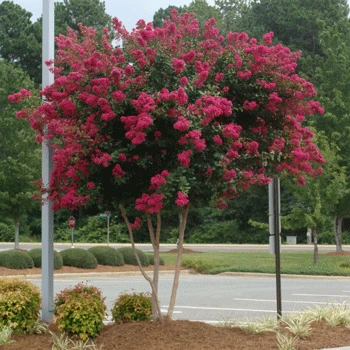


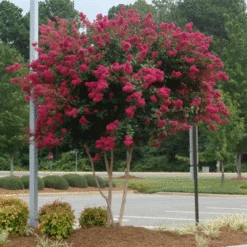
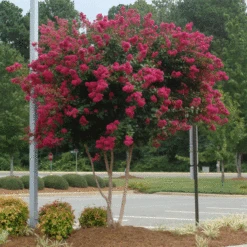

Cherokee Crape Myrtle
Original price was: $99.95.$69.97Current price is: $69.97.
- Shop with ease, buy with confidence.
- Free and fast shipping worldwide
- Service with a smile, always online.
- The best quality products, always.

Months of Visual Interest, Right in California
Why Cherokee Crape Myrtles?
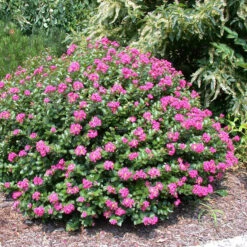
Bright red, frilly florals during summer meet rich green foliage and vibrant red-orange tones in fall: The Cherokee Crape Myrtle has it all. And not only does it boast months of visual interest and great looks – but it’s also well-suited as a focal point for almost any location in your landscape.
So, it’s versatile too. Especially since it’s grown right in the Golden State. Whether you use it as an accent, mass planting or hedge, the Cherokee Crape Myrtle is ideal for your home because it’s made for your California climate and soil. And though it may take some time for its iconic multi-trunk silhouette to develop, it couldn’t be easier to grow.
Plus, it’s cold hardy down to 0 degrees. A vibrant tree like the Cherokee Crape, standing up to desert heat and frigid temperatures, seems almost too good to be true. But with the Cherokee, you truly get it all.
Why Fast-Growing-Trees.com is Better
The best part of the Cherokee Crape Myrtle, though? The fact that it’s hand-picked by horticulturists. And since it’s nurtured, planted and shipped with care, roots intact, it performs even better.
When this Cherokee Crape Myrtle arrives at your door, it’s ready to grow…and grow well.
All this and more means beauty and elegance paired with a ton of low-maintenance perks. There’s nothing like the Cherokee Crape Myrtle because it’s grown in California for California. Basically, the Cherokee Crape Myrtle is tailored for your landscape – order now, before it’s gone!
Planting & Care
1. Planting: The showy, densely-growing Crape is well-suited for a variety of settings and doesn’t need much care. However, we do have a few best practices to keep in mind.
When it’s time to plant your Cherokee Crape, choose an area with at least 6 to 8 hours of sunlight per day and well-drained, somewhat moistened soil. Rich, acidic soils are best, but this Cherokee is hassle-free and fairly adaptable either way. Plus, it’s highly tolerant of urban pollution.
To plant, dig a hole that’s two or three times the width of your tree’s root ball. Place the plant, tamp down the soil and then water to establish the roots.
2. Watering: The Cherokee Crape Myrtle needs moistened soil, so it’s important to water regularly, about once weekly, until the tree is established. If you’re not sure when to water, check the surrounding soil for dryness (down to about 2 or 3 inches). If the soil is dry, the Crape Myrtle needs to be watered.
3. Fertilizing: When your Cherokee Crape Myrtle is young (during the first couple of growing seasons), we recommend using an all-purpose fertilizer, or specialized fertilizer if you want to test your soil’s needs.
4. Pruning: Extensive pruning is not needed, but we recommend removing dead or diseased limbs from your Cherokee Crape Myrtle. And any pruning should also be completed during the winter season or during dormancy.
| Height | 4-5 ft., 5-6 ft. |
|---|
Be the first to review “Cherokee Crape Myrtle”
Related products
Flowering Trees

Dogwood Trees
Crape Myrtles
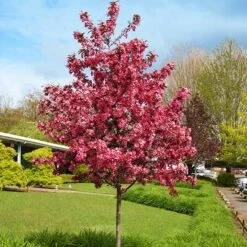
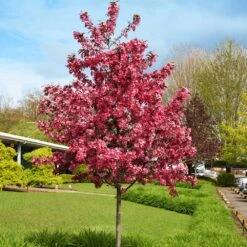
Crabapple Trees
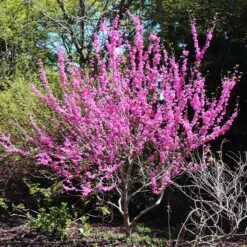
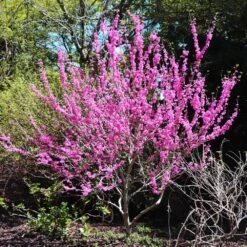
Flowering Trees
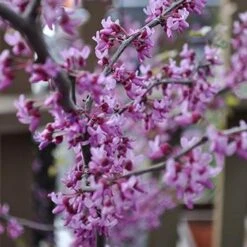
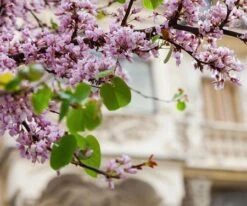
Flowering Trees

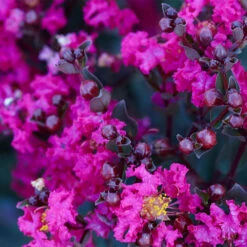
Crape Myrtles
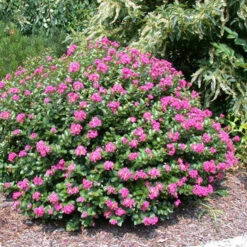
Crape Myrtles
Reviews
There are no reviews yet.